
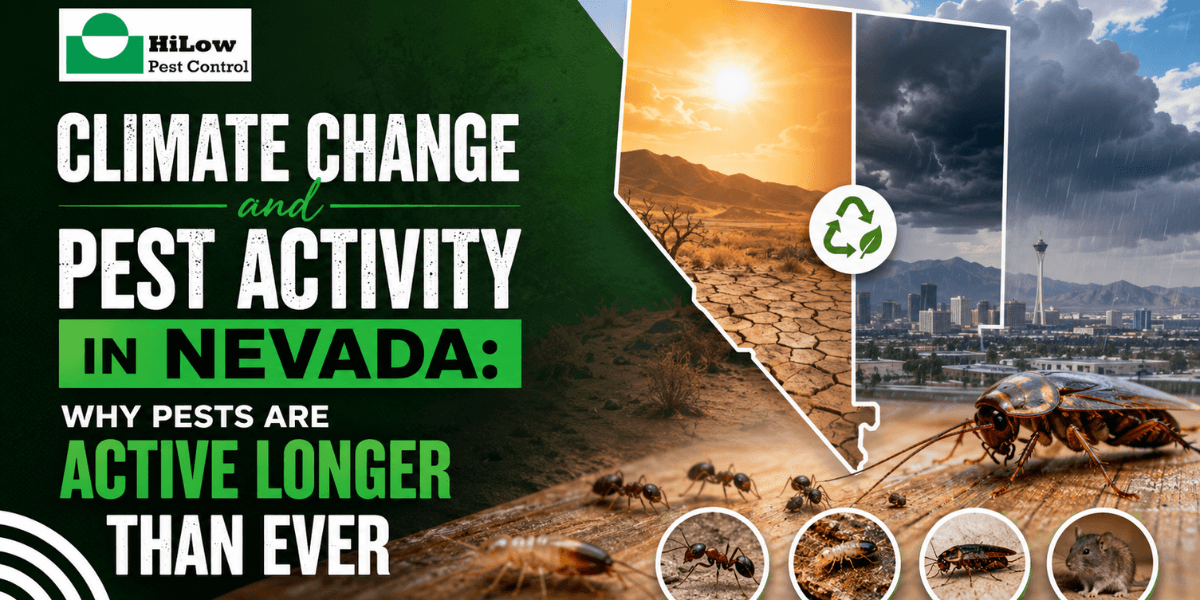
Nevada’s weather has changed a great deal over the past few decades. Winters that used to send bugs into hiding now stay mild enough for many of them to keep moving. Reno’s fall season now warms up faster than nearly any other city in the country, and the first freeze arrives weeks later than it did back in 1970. Every extra warm week gives ants, spiders, and mosquitoes more time to feed, breed, and grow their numbers.
This blog looks at pest activity in Nevada due to climate change and why your home might need a plan built for a longer bug season.
Why Pests Are Staying Active Longer in Reno, Nevada?
Pests simply follow the weather, and Nevada’s weather has stopped giving them a reason to slow down. Cold snaps used to kill off weak insects and force the rest into hibernation for months at a time. That old rhythm is fading fast, and bugs are noticing before we are.
Reno’s fall season is heating up faster than almost any city in America, pushing the first freeze back by nearly six weeks compared to 1970. Those extra weeks give insects more food, more warmth, and more time to build up their numbers before winter finally shows up. This isn’t a one-year fluke either, since the pattern has been building steadily for decades, which is exactly why pest control in Nevada has become less of a seasonal task and more of a year-round necessity for homeowners across the state.
How Climate Change Is Affecting Pest Activity in Nevada
Small shifts in weather add up fast, and they explain a lot about local bug behavior.
-
Warmer Winters Mean Fewer Pests Die Off
Cold winter nights used to kill off a large share of Nevada’s insect population every year. Nevada’s winters have grown milder, so fewer pests freeze before spring arrives. Researchers studying the state’s climate expect several more degrees of winter warming in the coming decades, and that alone changes survival rates for insects across the board.
-
Longer Falls Give Pests Extra Time to Breed
Warmer autumn air keeps disease carrying insects moving long after they would normally slow down. Washoe County saw mosquito counts jump eightfold in one recent season compared to the year before it. Extra weeks of warm weather in October and November give these bugs more chances to lay eggs before the cold finally sets in.
-
Early Springs Wake Up Dormant Insects Sooner
Nevada’s growing season has stretched by several weeks in many parts of the state. Bees, ants, and termites that once waited until late spring now start moving weeks earlier, giving colonies a head start before summer even begins.
-
Less Snow Changes the Soil and Water Balance
Nevada’s mountain snowpack is expected to shrink by a large margin later this century, and that changes more than ski season. Drier soil for part of the year pushes ants, spiders, and rodents toward homes in search of moisture. A dry yard gives pests fewer reasons to stay outside, so they start looking for a wetter spot indoors.
-
Extreme Heat Pushes Pests Indoors for Shelter
Nevada summers now bring more days above ninety degrees than they used to. Scorpions, spiders, and roaches all seek cooler, damp spaces once the outdoor heat becomes too much to handle.
-
Wildfire Season Adds to the Stress
Nevada has seen some of its largest wildfire years happen since 2005, and dry conditions play a direct role. Smoke and heat push insects and rodents toward yards that still hold shade and water.
-
Dry Soil Sends Pests Looking for Water Sooner
A drier Nevada landscape means natural water sources dry up faster than before. Ants, spiders, and rodents notice this shift quickly and start searching nearby homes for a reliable source, sometimes weeks before the first real hot spell of summer.
Which Pests Are Most Affected by Warmer Weather in Nevada
Nevada sees certain bugs multiply faster than others once the weather turns mild.
-
Ants
Ants build large underground colonies that survive best when the ground stays warm and slightly damp. Nevada’s shorter, milder winters let colonies keep growing without the usual pullback each year.
-
Termites
Termites need warmth and moisture to swarm and start new colonies. Rising spring temperatures across Nevada trigger swarms earlier than they did a generation ago, giving colonies more time to spread through wood framing before anyone notices.
-
Spiders and Scorpions
Spiders and scorpions both follow food and shelter, and warmer nights keep their prey active longer too. Dry summer heat pushes them toward homes looking for water and shade, where they can stay comfortable for most of the year.
-
Cockroaches
Cockroaches thrive in warm, humid pockets, and mild winters give them fewer reasons to slow down. Forecasters have flagged Nevada as a hot spot for roach activity because of unusually warm winter temperatures.
-
Mosquitoes
Mosquitoes need standing water and warm air to breed, and Nevada has been supplying more of both lately. Later freezes mean mosquito larvae survive longer into fall, stretching a season that used to end by September.
-
Rodents
Rodents chew through wires, insulation, and wood as they search for warmth once the weather cools. Milder falls delay the point when mice and rats move indoors, but once inside, they cause damage fast.
As warmer weather extends pest activity across Nevada, taking action early can help prevent infestations from getting out of hand. HiLow Pest Control is a trusted exterminator in Reno, NV for tackling seasonal pest problems before they become costly infestations. Contact us now for a thorough inspection and customized pest control solution!
Nevada Pest Activity: Then and Now
A quick look at how pest timing in Nevada has shifted over the past few decades tells the story best.
| Pest | Traditional Active Season | Nevada’s Active Season Now |
| Ants | April to September | March to October |
| Termites | May to July | April to August |
| Mosquitoes | June to August | May to October |
| Spiders and Scorpions | May to September | April to November |
| Rodents | October to March | September to April |
Seasonal Pest Prevention Tips for Every Nevada Home
Small habits done consistently keep pest numbers down no matter what the weather decides to do.
- Seal gaps around doors, windows, and pipes before pests find them first.
- Clear standing water from gutters, buckets, and yard containers to remove mosquito breeding spots.
- Trim shrubs and tree branches away from the house to cut off bridges for ants and spiders.
- Store firewood and mulch away from the foundation, since both attract moisture-loving pests.
- Fix leaky faucets and irrigation lines that keep the soil near your home damp.
- Keep kitchens and pantries clean, with food stored in sealed containers.
- Set up year-round pest control on a regular schedule so colonies get caught before they rebuild.
Conclusion
Nevada’s weather has changed enough to give pests a real advantage, and that advantage will not fade on its own. Warmer winters, longer falls, and earlier springs add up to more months of pest activity than the state has seen before. Every homeowner now has to plan around pest activity due to climate change in Nevada, since the old seasonal breaks pests once relied on keep shrinking. A little preparation now goes a long way toward a calmer, quieter house all year long.
Book a seasonal inspection with HiLow Pest Control and get ahead of Nevada’s longer pest season. Our team offers routine checkups and termite control in Reno that homeowners can count on, built around your property’s real risks. Reach out to us today!
Frequently Asked Questions
- How is climate change affecting pest activity in Nevada?
Milder winters and longer falls give pests a real advantage year after year. Insects that once died off or went dormant now survive later into the season and wake up earlier in spring. This creates a longer window when pests can feed, breed, and build their numbers.
- Why are pests staying active longer in Reno?
Reno’s fall season is warming faster than almost any other city in the country, pushing the first freeze back by weeks. That extra warm stretch gives insects more time to reproduce before winter arrives.
- Does a warmer winter increase pest infestations?
Yes, and the reason is simple: fewer pests die off each winter, so more of them survive into spring and start reproducing sooner.
- Which pests are most affected by climate change in Nevada?
Ants, termites, spiders, scorpions, mosquitoes, and rodents all respond strongly to Nevada’s shifting seasons. Termites and mosquitoes are especially sensitive to changes in moisture and temperature.
- How can homeowners prevent climate-related pest problems?
Homeowners can seal entry points, remove standing water, and trim plants away from the house to limit pest access. Scheduling regular inspections catches problems before they turn into full infestations. A plan built around Nevada’s longer pest season offers the best long-term protection.