

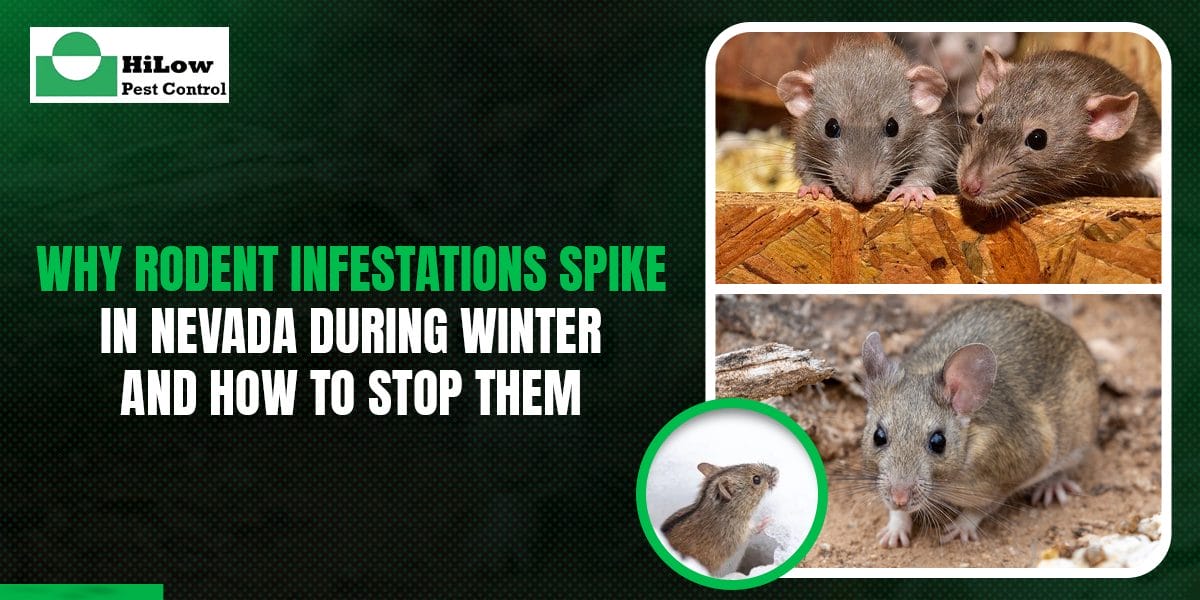
Winter brings a sharp rise in rodent infestations in Nevada, as dropping temperatures push pests indoors. Many homeowners discover sudden activity as rodents look for warmth and accessible food. Understanding these seasonal changes helps prevent damage and health risks.
With the support of HiLow Pest Control, addressing rodent infestations becomes far more manageable.
Why Winter Brings More Rodents Indoors in Nevada
Cold weather weakens outdoor shelters, forcing rodents to move into heated spaces that protect them from harsh conditions. Attics, crawl spaces, and wall voids become prime areas for nesting once temperatures fall. This shift explains why rodent infestations in Nevada surge throughout winter months.
Rodents also rely on structured openings created by aging materials or weather changes. Small cracks near roofing, vents, or utility lines allow easy indoor movement. Nevada’s growing communities contribute to habitat loss, pushing rodents closer to homes.
Common Rodent Species Active in Nevada Winters
- Roof rats typically enter from higher points such as attics or roofs.
- Nevada rats stay near ground-level access areas, including drains or foundation gaps.
- House mice create the fastest expansion indoors because they can slip through extremely narrow openings.
These species quickly adjust to indoor environments and spread through hidden spaces. Without attention, they multiply and cause deeper rodent infestations in Nevada, especially during colder months. Early detection is important for controlling their activity.
Key Reasons: Why Rodents Choose Homes During Winter
Rodents instinctively search for warm, enclosed locations as outdoor temperatures drop. Heated buildings create stable environments where they can move freely and hide. Once inside, they explore food zones and sheltered corners.
Food scraps, unsealed items, and holiday supplies draw rodents deeper into kitchens and storage rooms. Winter also reduces outdoor predator activity, allowing rodents to move indoors with fewer obstacles. Their survival increases significantly during this season.
The Hidden Dangers of Ignoring Winter Rodent Activity
- Rodents damage wires, insulation, and stored goods while spreading waste throughout living spaces. Their presence increases the risk of illness through droppings, urine, or contaminated food.
- Health concerns rise quickly when infestations remain unnoticed.
- Unchecked colonies expand through walls, ceiling voids, and attic insulation.
Professional rodent control becomes necessary to protect homes from long-term harm. Addressing the problem early helps prevent larger issues later.
Why DIY Rodent Removal Does Not Work Well
DIY products rarely reach the full scope of a winter infestation, leaving concerned areas untreated. Rodents adapt quickly, move away from traps, or hide in inaccessible places. Many home methods do not tackle entry points or nesting zones.
Key reasons why DIY fails are:
- Hidden nests behind walls or insulation that cannot be reached.
- Inadequate sealing techniques can lead to rodents returning indoors.
- Limited tools and placement strategies that reduce success.
Professional rodent removal brings a more thorough approach that targets the infestation from all sides.
HiLow Pest Control’s Strategic Winter Rodent Process
HiLow Pest Control performs a detailed inspection to locate entry points, nesting pockets, and food sources. Our pest control team uses structured methods to block rodent movement and remove activity. Winter conditions require planning to keep rodents from returning.
Their service mentions:
- Property-wide assessments to track rodent patterns and hiding zones.
- Strong exclusion materials to seal gaps and stop re-entry.
- Rodent wildlife control for homes facing mixed intrusion issues.
With thorough follow-up, homeowners regain a clean and protected environment.
Important Winter Prevention Tips for Nevada Homes
- Stopping winter rodent infestation in Nevada starts with closing every structural gap that gives rodents access to warmth.
- Reinforcing cracks near vents, siding, roof line, and door frames blocks their main winter entry routes.
- You should also secure all food in sealed containers and maintain clean surfaces to remove scents that guide rodents indoors.
- To strengthen protection, homeowners should monitor early signs and try to stop rodent & wildlife intrusions by responding quickly to noises or droppings.
Seasonal inspections from a trusted pest control service in Reno help detect hidden risks, so choose a pest control company that provides long-term control and prevents rodents from settling inside insulation or crawl spaces during cold months.
Conclusion
Winter naturally triggers more rodent infestations in Nevada, but early prevention and timely action help reduce risks. Homeowners who seal gaps, monitor activity, and maintain a clean space stay better protected. With guidance from HiLow Pest Control, winter rodent challenges become easier to manage.
Staying proactive prevents future rodent infestations in Nevada and protects property year after year.
Frequently Asked Questions About Why Rodent Infestations Spike in Nevada During Winter:
Q1: What triggers the rise of winter rodent infestations in Nevada?
A1: Cold weather pushes rodents indoors seeking shelter, warmth, and food.
Q2: What signs show that rodents have entered my home?
A2: Scratching sounds, droppings, gnaw marks, and odors indicate their presence.
Q3: When should I contact a professional for rodent issues?
A3: Reach out as soon as any activity appears, since rodents spread quickly.