
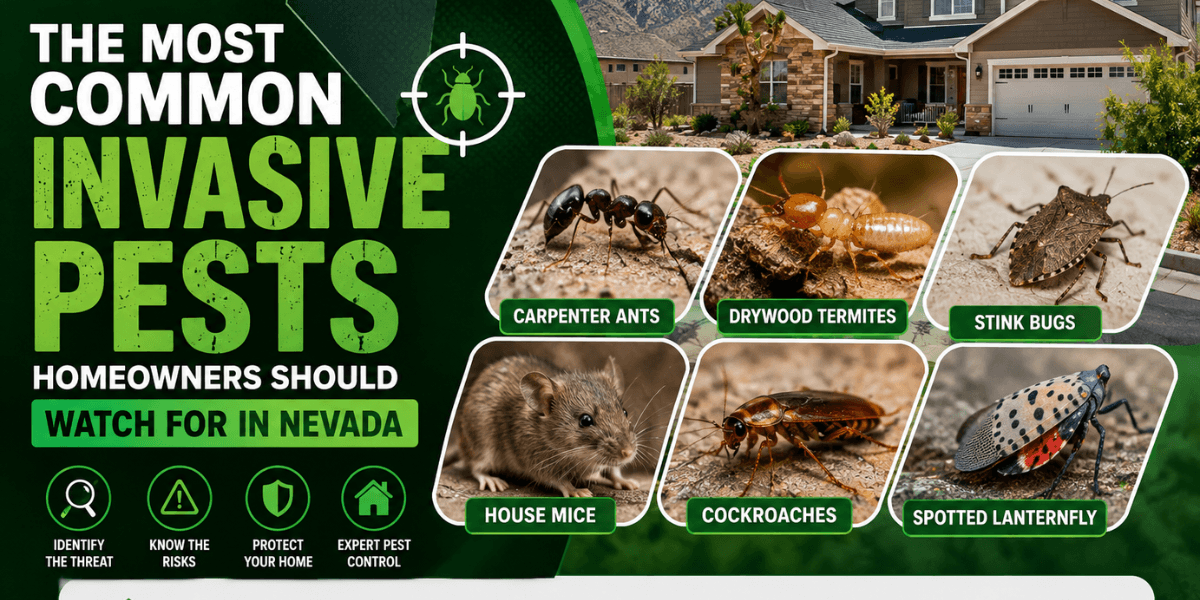
Nevada’s dry heat and sudden storms create the perfect setup for bugs and critters to move indoors. Homeowners across the state deal with tiny ants marching across kitchen counters and spiders tucked behind furniture. Invasive pests in Nevada don’t wait for an invitation. They slip through the smallest gap in a window screen or door frame. Some cause minor annoyance. Others chew through wood, wiring, and insulation, leading to real damage and repair bills. This guide covers the pests most common in Nevada homes, how to spot them early, and simple habits that keep them out for good.
The Most Common Invasive Pests Found in Nevada Homes
Nevada’s climate attracts a variety of pests to homes year-round.
-
Spiders Hiding in Quiet Corners
Spiders favor dark, undisturbed spots like garages, closets, and stacked woodpiles around the yard. Most species found in Nevada are harmless and help control other bugs. Black widows are the exception, since they pack a painful bite and prefer cluttered storage areas left untouched for long stretches.
-
Ants Building Colonies Indoors
Ants rank among the most common pests found in Nevada kitchens and bathrooms. They squeeze through cracks the size of a pencil tip and establish colonies near food and water sources. Carpenter ants take things further by tunneling into damp or soft wood, which slowly weakens support beams and door frames over time.
-
Rodents Chewing Through Walls
Mice and roof rats squeeze through gaps as small as a quarter coin and quickly settle into attics, garages, and wall voids. Once inside, they gnaw on wiring and insulation, which raises the risk of an electrical fire. Their droppings also carry bacteria that can spread illness to people and pets.
-
Cockroaches Surviving in Kitchens
Cockroaches thrive in warm, moist environments with food scraps left out overnight. German cockroaches are especially common and multiply fast in kitchens and bathrooms across Nevada homes. A small daytime sighting usually means a much larger population is already hiding out of sight.
-
Termites Damaging Wood Structures
Subterranean termites build narrow mud tubes along foundations and quietly feed on wood framing for months before anyone notices the damage. Nevada’s dry climate does not stop them, since they travel through soil to reach moisture trapped inside homes. Yearly inspections remain the best way to catch an early infestation.
How to Identify Invasive Pests in Nevada Residential Properties
Early detection makes infestations easier to manage by helping you spot pests before they spread.
-
Small Piles of Wood Shavings
Fine sawdust collecting near baseboards or window frames usually points to carpenter ants or wood-boring beetles at work. The shavings pile up directly below the damaged section of wood. This debris is a strong clue that something is actively chewing nearby, and it is worth a closer look.
-
Grease Marks Along Walls
Rats and mice leave dark, greasy smudges where their fur brushes against walls and baseboards on repeated trips. These marks trace their regular travel paths between nesting spots and nearby food sources. Spotting a consistent trail along the same route is one of the clearest signs rodents are present.
-
Shed Skins in Corners
Cockroaches and spiders shed their exoskeletons as they grow, leaving thin, papery shells scattered behind. These skins collect in closets, under sinks, and near pipes where pests feel safe. Finding a cluster of shed skins is one of the clearer signals that professional pest control in Nevada may be worth calling in.
-
Small Holes in Fabric or Wood
Certain beetles and rodents leave small round holes in furniture, clothing, and wood trim around the house. The edges of these holes usually look clean and fairly consistent in size. Comparing the size and pattern of the holes helps narrow down which pest is actually responsible.
-
Webs in Unused Spaces
Spiders build webs in corners, vents, and storage areas that go untouched for weeks at a time. Thick, dusty webs usually point to spiders that have lived in that spot for a while. Fresh, sticky webs suggest a recent arrival worth watching closely over the next few days.
-
Live or Dead Insects Indoors
A single bug sighting is not always a cause for concern, since pests can wander in from outside. Repeated sightings in the same room, however, usually point to a nearby nest worth investigating. Looking under sinks, behind appliances, and inside cabinets usually reveals exactly where they are coming from. These clues are easy to miss but worth catching early, since small problems turn into big repairs fast. HiLow Pest Control offers professional pest control services in Reno, NV and can confirm exactly what is hiding in your home before it spreads further. Contact us now!
A Quick Look at Common Nevada Pests
Here’s a simple breakdown of where these pests hide and what risks they bring to a home.
| Pest | Common Hiding Spot | Main Risk |
| Ants | Kitchens, cracks in walls | Contaminated food, wood damage |
| Rodents | Attics, wall voids | Chewed wires, disease |
| Cockroaches | Kitchens, bathrooms | Allergies, asthma triggers |
| Termites | Foundations, wood framing | Structural damage |
| Spiders | Garages, storage boxes | Bites, especially black widows |
| Scorpions | Woodpiles, dark corners | Painful stings |
Top Signs of Invasive Pest Infestations Every Nevada Homeowner Should Know
 Early signs make infestations easier to control before they become a bigger problem.
-
Droppings Near Food Storage
Small, dark droppings around pantry shelves or under sinks usually indicate that rodents or roaches have been active recently. Dropping size and appearance can reveal the type of pest causing the issue. Cleaning the area right away limits contamination and makes it easier to spot new activity later.
-
Musty Smells in Closed Rooms
A stale, musty odor in closets, basements, or crawl spaces can point to rodent nests or moisture-loving pests. The smell usually becomes stronger near the nesting site as the population increases. Airing out the space and checking nearby corners helps confirm exactly where the odor is coming from.
-
Chewed Wires or Baseboards
Frayed wiring, gnaw marks on baseboards, and shredded insulation all point directly to rodents living nearby. This kind of damage raises the risk of electrical shorts and even house fires if left unchecked. An electrician or pest professional can check behind walls for damage that is not visible.
-
Egg Casings Tucked Into Corners
Cockroaches and spiders leave small egg casings in cabinets, closets, and other quiet spots around the home. These casings look like tiny pouches or small clusters and can sit unnoticed for weeks. They usually turn up only after a thorough cleaning, sweeping, or vacuuming of forgotten corners.
-
Bite Marks or Skin Irritation
Unexplained bites or rashes on family members or pets can signal bed bugs, fleas, or spiders living inside the home. Checking mattress seams, pet bedding, and furniture cracks helps narrow down where the pest is hiding. Persistent irritation that does not improve is always worth a closer look and a proper inspection.
-
Strange Sounds Behind Walls
Sounds like scratching, scurrying, or tapping inside walls or ceilings usually mean rodents or larger wildlife have moved in. These sounds usually pick up at night when pests are the most active and searching for food. A pest professional can pinpoint the exact location of the activity using simple inspection tools.
How to Prevent Invasive Pest Infestations in Nevada Homes
A few good habits help keep pests out and protect your home over time.
- Seal Cracks and Gaps: Close off openings around pipes, vents, and window frames with caulk or steel wool, since even a coin-sized gap is enough room for most pests.
- Store Food in Sealed Containers: Move pantry staples like cereal, rice, and pet food into airtight bins so the smell doesn’t draw in ants and rodents.
- Fix Leaks and Standing Water: Repair dripping faucets and clear out gutters, since pests need water just as much as they need food.
- Trim Plants Away from the House: Keep at least a foot of space between shrubs or tree branches and the exterior walls to remove an easy bridge indoors.
- Manage Firewood and Outdoor Storage: Store firewood at least twenty feet from the house and off the ground, and keep storage bins sealed and lifted off the soil.
- Keep Trash Bins Sealed: Use tight-fitting lids and stick to regular pickup so rodents and insects don’t find an easy meal right outside the door.
- Declutter Storage Areas: Clear out unused boxes and swap cardboard for plastic bins in garages, attics, and closets to remove hiding spots.
- Schedule Routine Pest Inspections: A professional check once or twice a year catches problems in crawl spaces and attic corners before they turn into costly damage.
Wrap Up
Nevada homes face a steady mix of ants, rodents, spiders, and other unwelcome visitors year-round. Catching the early signs and sealing up common entry points keeps most problems small and manageable. Reliable pest control in Nevada combines regular inspections with simple prevention habits, and that combination makes all the difference between a minor nuisance and a costly repair. The sooner a pest problem is spotted, the easier it is to fix. HiLow Pest Control offers the best pest control service in Carson City, NV and nearby areas, with a team ready to inspect, treat, and protect your home. Reach out to us today to get started!
Frequently Asked Questions
- What Are the Most Common Invasive Pests in Nevada?
Ants, spiders, rodents, cockroaches, termites, and scorpions top the list across most neighborhoods. They become more active during the warmer months.
- How Can I Identify Invasive Pests in My Home?
Look for droppings, shed skins, chewed materials, and small holes in wood or fabric. These clues usually point to which pest is present.
- Are Invasive Pests Dangerous to People and Pets?
Some, like black widows and rodents, carry real health risks through bites or bacteria. Others mainly cause property damage.
- How Do Invasive Pests Damage Homes and Landscapes?
Termites and carpenter ants weaken wood framing, while rodents chew through wiring and insulation. Some insects also damage plants and irrigation lines outdoors.
- How Can I Prevent Invasive Pest Infestations in Nevada?
A few simple habits, like sealing entry points, storing food properly, and fixing leaks, form the backbone of pest prevention in Nevada. A yearly inspection helps catch anything those habits might miss.