

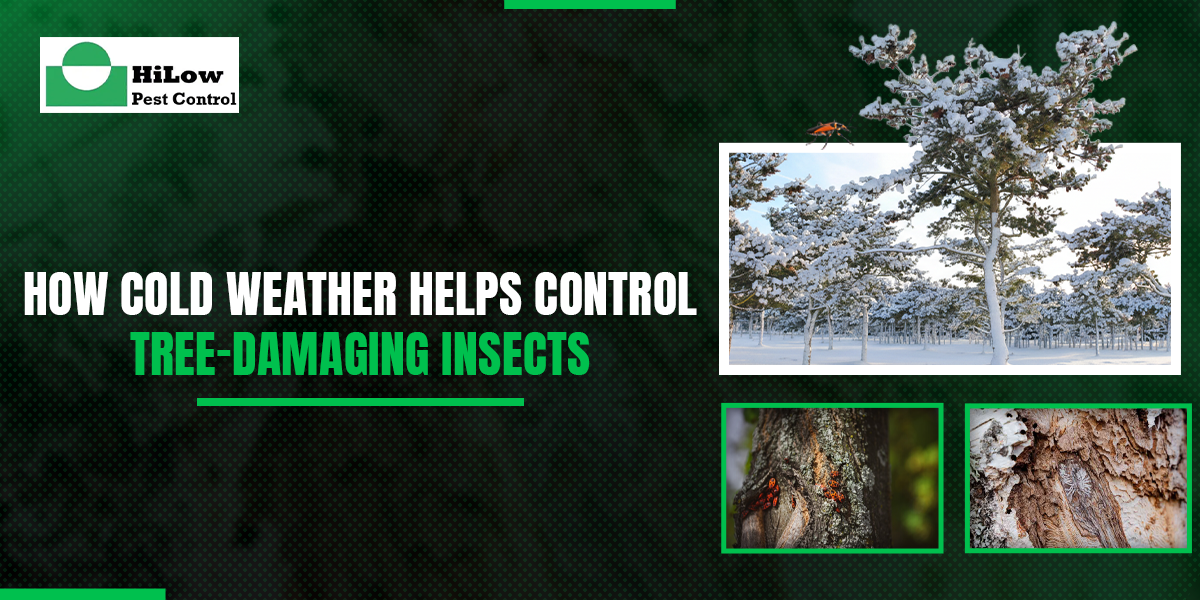
Every homeowner seems relaxed about pest problems whenever winter arrives until spring. Yes, it’s true. Cold weather has a significant role in managing pests, especially pests that damage trees. To protect your long-term damages and landscape, you must understand how seasonal changes affect insect behavior. Winter proves to be the critical time for tree protection, and understanding how cold weather insect control works can save your trees.
Why Winter Matters for Tree Health
While trees may appear sluggish during winter, insects are actively seeking survival beneath their surface. When it comes to finding suitable shelter, many tree-damaging insects depend on warm temperatures to feed, reproduce, and spread.
The wintertime is considered the best natural pause and an ideal time for inspection and controlling methods, which later help in preventing severe insect infections in trees once spring arrives.
How Cold Weather Affects Insects
Many insects that damage trees are affected by the cold weather, which reduces their survival rates. The vulnerable family of some of the insects, like eggs, larvae, and exposed adults, cannot tolerate prolonged cold, especially during a sudden temperature drop. During this period, implementing winter insect control became easier and more effective in the long term.
There are various effects of cold weather on insects damaging trees, and the insect’s nature is one of them. During winter, insects’ metabolism slows down, which leads to limited movement and feeding, and because of it, they cause far less damage to trees. This slowdown is the crucial reason that controlling insects in cold weather is so effective as a natural pest management tool.
Common Tree-Damaging Insects Affected by Cold Weather
Many insects that affect the tree’s health badly struggle to survive harsh winter conditions. These include:
- Aphids and scale insects that weaken trees by feeding on sap
- Caterpillars that defoliate trees during warmer months
- Bores that tunnel into trunks and branches
Even some insects that stay hidden under the tree bark or soil face extinction and limited activity due to cold temperatures. To protect your trees year-round, you should use cold weather pest control, which proves to be an essential part.
Winter is the Best Time for Tree Inspection
If you want to save your tree and landscape, choosing the winter season for inspection will be the best time due to its visibility. With excellent visibility, we can easily spot damage, egg masses, and signs of insect infestation in trees. It will help in early intervention by checking cracks in bark, existing holes, and weakened branches that become more noticeable.
During winter, professional inspections help identify hidden risks related to both tree diseases & insect infestations before they accelerate. Knowing these issues earlier will help you to avoid aggressive treatments later.
The Role of Professional Pest Control Services
The cold temperature, of course, affects the insects naturally, but it does not eliminate them completely. Due to this, some pests still nest in protected areas. In this way, combining nature’s benefits with a professional pest control service is the best solution for long-term results.
You can save your trees by making proper decisions in winter; you should choose a trained tree disease and insect management service. Such a service provider understands how insects behave during winter and applies targeted treatments that are safe and effective.
If you want expert care for your trees, you must look for a trusted pest control company in Reno that offers solutions tailored to local climate conditions and pest pressure.
Why Winter Pest Control Saves Money
If you don’t want to spend a heavy amount of money on warmer days, it is better to address the insect issue in winter. During winter, due to reduced insect activity, the treatment becomes more precise and requires fewer applications. This makes cold weather insect control both effective and economical.
Such preventive methods and care also reduce long-term damage, helping trees stay healthy and avoiding costly removals or replacements.
How HiLow Pest Control Helps Protect Your Trees
Tree health is very important to keep your landscape beautiful, and working with a professional pest control provider is essential. At HiLow Pest Control, experts understand how seasonal changes impact pests and tree health.
With years of satisfied experience with customers, they are known for expert inspections, targeted treatments, and ongoing monitoring, which help homeowners reduce insect activity and prevent future outbreaks.
Conclusion
Cold weather plays an important role in controlling insect populations that can damage trees. To keep your tress healthy and your landscape thriving, working with a trusted professional matters. HiLow Pest Control offers expert support backed by certified arborists and complimentary inspections to identify issues early. Taking a proactive winter approach prepares your trees for spring growth and helps them become stronger. Cold weather insect control remains one of the most effective ways to protect your trees and safeguard your environment for the long term.
Frequently Asked Questions on How Cold Weather Helps Control Tree-Damaging Insects:
Q1. Can winter eliminate tree-damaging insects?
A1. No, cold weather significantly reduces the activity and population of tree-damaging insects.
Q2. Which insects are the most susceptible to control during cold weather?
A2. Winter conditions especially target aphids, borers, caterpillars, and scale insects.
Q3. Is professional pest control still needed in winter?
A3. Yes, a professional agency targets hidden pests and prevents springtime outbreaks.